
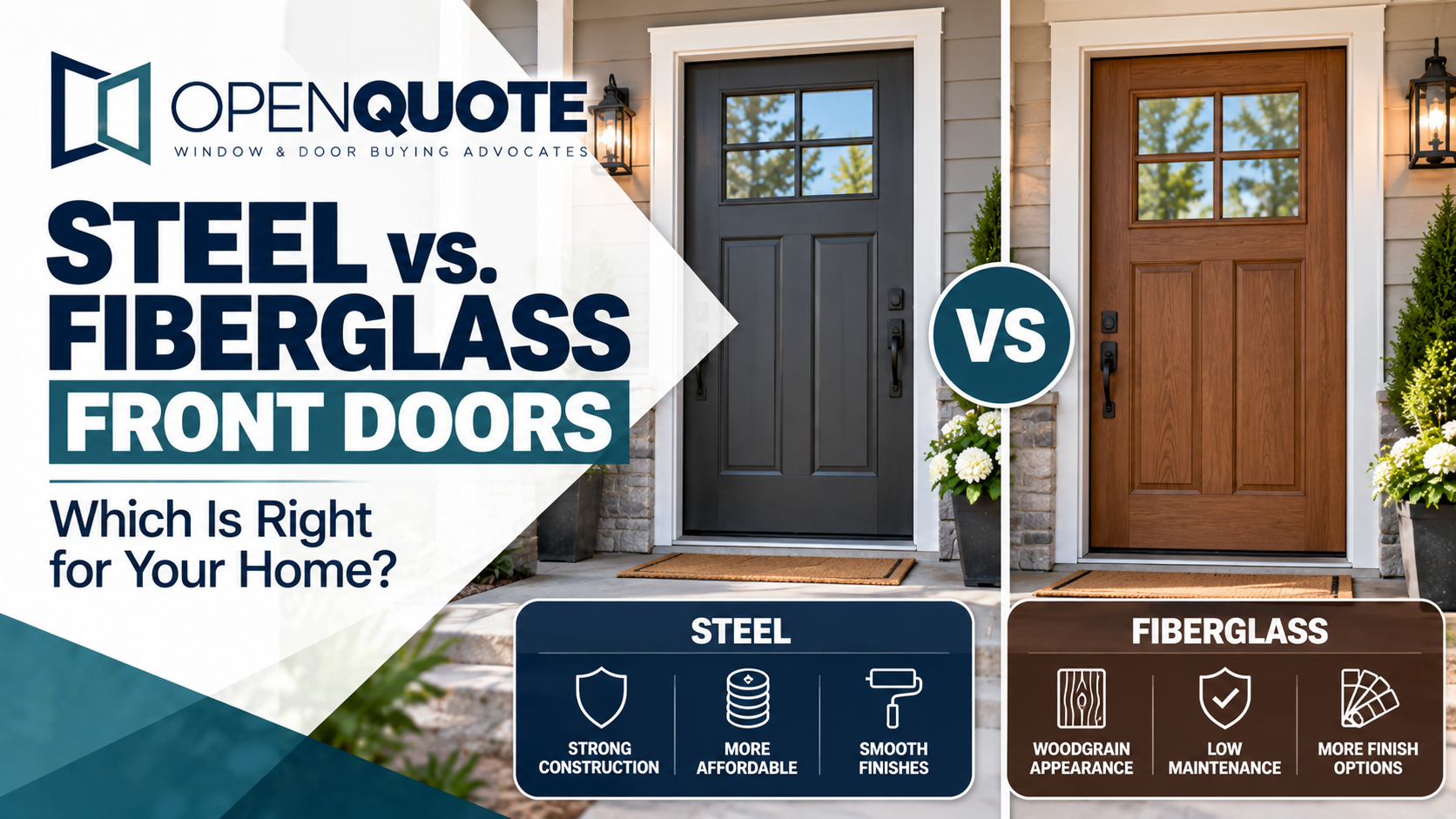
Steel vs. Fiberglass Front Doors: Which Is Right for Your Home?
When shopping for a replacement front door, two materials you'll commonly come across are steel and fiberglass.
At first glance, they may look similar. Both can be available in a variety of colors, styles, glass designs, and configurations.
But there are differences homeowners should understand before choosing between them.
Price, appearance, maintenance, construction, finish options, warranties, and the specific door system can all affect which option makes more sense for your home.
Here's what to consider before making your decision.
Already Have a Front Door Quote?
If you're comparing steel and fiberglass front door quotes and aren't sure which option makes sense, OpenQuote can help you understand what you're actually buying.
OpenQuote provides independent window and door quote reviews for homeowners. We help you evaluate the door, glass, hardware, installation, warranties, options, and pricing included in your proposal.
We don't sell or install windows and doors. We help you buy them.
Window and door quote reviews start at $149.
What Is a Fiberglass Front Door?
A fiberglass entry door typically uses a fiberglass-reinforced exterior skin over an internal door structure.
One of the biggest advantages of fiberglass is the variety of appearances available.
Depending on the manufacturer and product line, fiberglass doors can have smooth finishes or textured surfaces designed to resemble real wood.
Homeowners may choose fiberglass because of:
- Woodgrain appearance options
- Variety of colors and stains
- Low maintenance
- Resistance to common weather exposure
- Multiple glass and decorative options
- Different levels of customization
However, not all fiberglass doors are constructed the same way.
The quality, internal construction, finish, glass, frame system, and warranty can vary significantly between products.
What Is a Steel Front Door?
Steel entry doors use a steel exterior skin as part of the door's construction.
They're commonly used in residential entry applications and are available at a wide range of price points.
Depending on the manufacturer and product, steel doors may offer:
- Strong exterior construction
- Smooth painted finishes
- Lower-cost options
- Multiple colors
- Decorative glass options
- Different panel designs
- Low maintenance requirements
Just like fiberglass, there are major differences between individual steel door products.
Don't assume that every steel door provides the same construction, performance, or warranty.
Which Costs More?
In many cases, fiberglass doors can cost more than comparable steel options, particularly when premium woodgrain finishes, decorative glass, or custom features are selected.
But that's not a rule.
The total price of an entry door project can depend on much more than the door material.
Factors may include:
- Manufacturer
- Product line
- Door size
- Single or double-door configuration
- Sidelites
- Transoms
- Decorative glass
- Hardware
- Color or stain
- Frame system
- Installation
- Interior and exterior trim
- Warranty
A basic fiberglass door could cost less than a highly customized steel entry system—or vice versa.
That's why it's important to compare the entire quote.
Which Looks Better?
Appearance is largely a matter of personal preference.
Fiberglass is often chosen by homeowners who want the appearance of wood without choosing a traditional wood entry door.
Some fiberglass doors have molded woodgrain textures and stain finishes designed to create a more natural appearance.
Steel doors are commonly available with smooth painted finishes and can work well with modern, traditional, and other home styles.
Rather than deciding based solely on the material, look at the specific door you're considering.
What About Maintenance?
Both steel and fiberglass doors can offer relatively low-maintenance options.
However, maintenance requirements depend on the specific product, finish, exposure, and manufacturer recommendations.
The finish is especially important.
Ask how the door should be cleaned and maintained and whether the finish requires any periodic care to maintain warranty coverage.
Which Is More Durable?
This question doesn't have a simple answer.
Steel and fiberglass respond differently to impact, weather, and everyday use.
Steel may be susceptible to denting under certain conditions, while fiberglass surfaces can experience different types of damage depending on the product and impact.
Construction quality also matters.
A premium door system shouldn't be evaluated solely based on whether its exterior skin is steel or fiberglass.
Consider the entire door system, including the frame, threshold, weatherstripping, hardware, finish, glass, and installation.
What About Energy Efficiency?
Homeowners sometimes assume one door material is automatically more energy efficient than another.
But the complete door system matters more than the material name alone.
Energy performance can be affected by:
- Door construction
- Insulating core
- Amount of glass
- Type of glass
- Weatherstripping
- Frame construction
- Threshold
- Installation
A door with a large decorative glass area may perform differently from a mostly solid door from the same product line.
If energy performance is important to you, ask for information about the specific door configuration you're purchasing.
Decorative Glass Can Change the Price Significantly
Glass is one of the biggest variables when comparing entry door quotes.
A basic solid door and a door with decorative glass, two sidelites, and a transom are very different products.
Glass options can vary by:
- Size
- Design
- Privacy level
- Number of panes
- Decorative details
- Energy-performance features
When comparing steel and fiberglass quotes, make sure you're also comparing similar glass configurations.
Otherwise, the price difference may have more to do with the glass than the door material.
Don't Forget the Door Frame
The slab is only one part of your entry door system.
Your quote may also include a new frame, threshold, weatherstripping, hinges, and other components.
Ask what material is being used for the frame and whether any portions of your existing door system will remain.
A good comparison should consider the entire entry system, not just the door slab.
Installation Matters Too
Even a high-quality entry door needs to be installed appropriately.
Ask your contractor:
Is the existing door and frame being completely removed?
How will the opening be insulated and sealed?
Is interior trim included?
Is exterior trim included?
Will the existing door be hauled away?
What happens if damage is discovered around the opening?
These details can affect both the project price and the finished result.
Compare the Warranties
Warranty coverage can differ between manufacturers, product lines, finishes, and components.
Check coverage for:
- Door slab
- Frame
- Glass
- Finish
- Hardware
- Weatherstripping
- Installation labor
Pay particular attention to the finish warranty if you're considering a stained or painted door.
Also check for exclusions related to exposure, maintenance, installation, or other conditions.
Steel vs. Fiberglass: Which Should You Choose?
There isn't one answer that's right for every homeowner.
Fiberglass may make sense if you prioritize woodgrain appearance, finish options, customization, and low maintenance.
Steel may make sense if you prefer a smooth painted appearance, strong construction, and potentially more budget-friendly options.
But material alone shouldn't determine your decision.
Instead, compare the specific products you're considering.
Look at the door construction, glass, frame, installation, finish, warranty, and total price.
Don't Compare Door Quotes by Material Alone
Imagine you receive two quotes:
Quote A: Steel Door — $4,200
Quote B: Fiberglass Door — $6,500
It might appear that the fiberglass door simply costs $2,300 more.
But Quote B could include upgraded decorative glass, a premium finish, different hardware, additional trim work, or a different installation scope.
Until you compare what's actually included, you don't know what's causing the price difference.
The better question isn't simply:
“Which door is cheaper?”
It's:
“What am I getting for my money?”