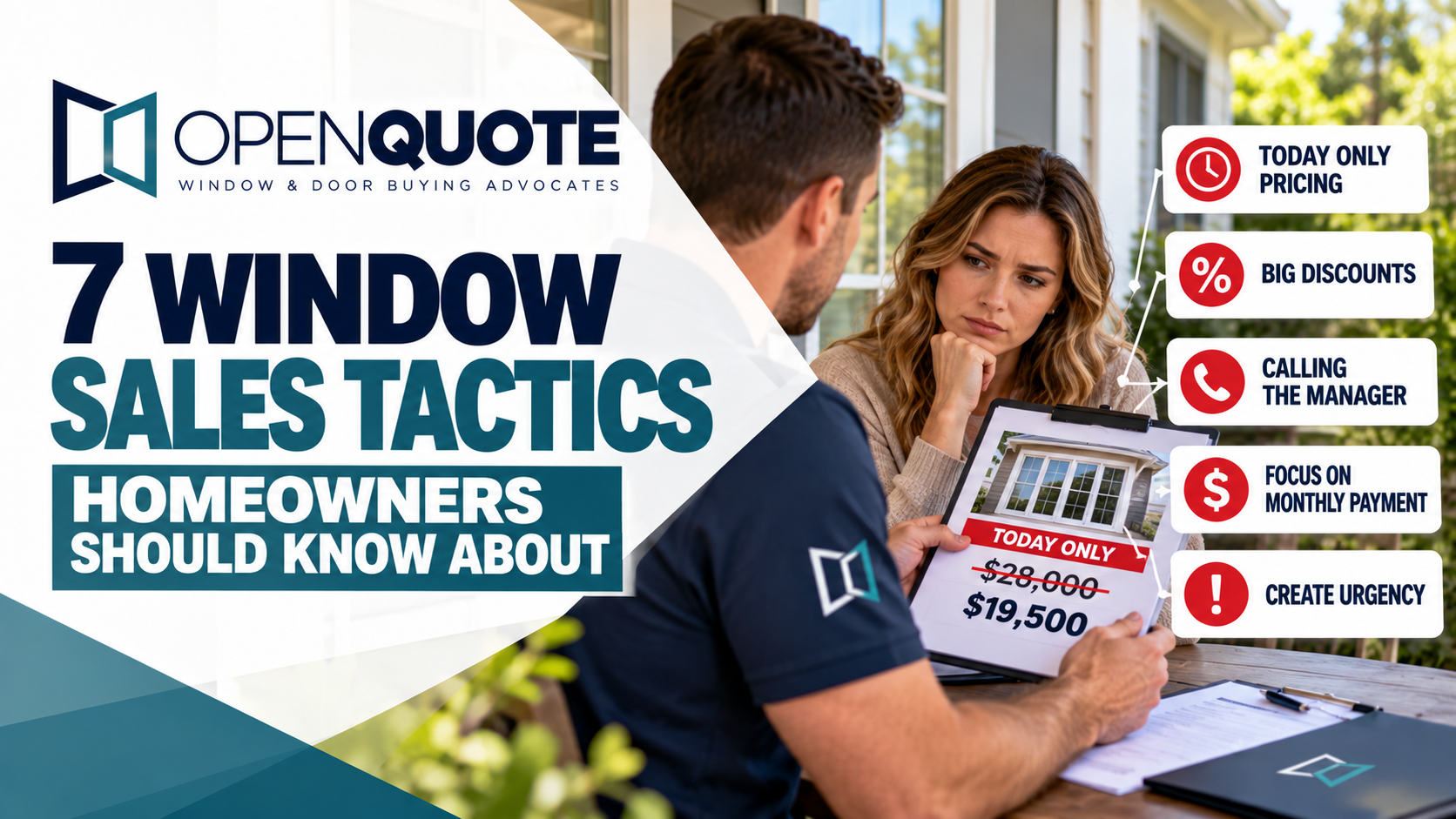
7 Window Sales Tactics Homeowners Should Know About
Buying replacement windows can be a little different from buying most things for your home.
You usually aren't looking at a price tag in a store. Instead, someone comes to your house, looks at the project, explains the product, and gives you a price.
Most window companies are simply trying to earn your business, and there's nothing wrong with a salesperson asking for the sale. But there are a few common sales tactics that I think homeowners should recognize before sitting through an appointment.
Knowing what's happening doesn't mean you shouldn't buy.
It just helps you make the decision because you actually want to move forward—not because you felt pressured into it.
Want a Second Opinion Before You Sign?
OpenQuote independently reviews window and door quotes to help homeowners understand the products, pricing, installation, warranties, and options they're being offered.
We don't sell windows or doors. We help you understand what you're buying.
Independent quote reviews start at $149.
1. The “Today Only” Price
This is probably the one most homeowners recognize.
You receive a price, but there's a catch:
“This price is only good if you sign today.”
Sometimes there may be a legitimate promotion with an expiration date. But there's a difference between a real promotion and a price that's specifically designed to keep you from shopping around.
If a $25,000 quote suddenly becomes $19,000 only if you sign before the salesperson leaves, I would ask why.
You should be able to understand the product, installation, warranty, and price before making a large purchase.
2. Starting High and Discounting the Price
This usually goes something like this:
The original price is $30,000.
Then there's a manufacturer discount.
Then a seasonal promotion.
Then a manager approves another discount.
Suddenly the project is $21,000.
That can make $21,000 feel like an incredible deal because you've been comparing it to $30,000 for the last 20 minutes.
But the number that really matters is what the project is actually worth.
Instead of focusing on how much money you're supposedly saving, focus on the final price and what you're getting for it.
3. Asking What It Will Take to Get You to Sign Today
There's nothing unusual about a salesperson asking for your business.
The problem is when the conversation becomes less about your project and more about finding the exact number that will make you sign immediately.
You might hear:
“If I could get this down another $2,000, would you do it today?”
Now the conversation has changed.
Instead of deciding whether the windows are right for your home, you're negotiating against yourself.
Before answering, make sure you already understand the product, installation, warranty, and total price.
4. Focusing Only on the Monthly Payment
This one is especially common when financing is involved.
Instead of talking about a $24,000 window project, the salesperson talks about:
“Only $249 per month.”
A monthly payment can absolutely matter when you're budgeting.
But don't let it replace the actual project price.
Ask what the cash price is, how much you're financing, the interest rate, the loan term, and how much you'll ultimately pay.
$249 per month doesn't tell you whether you're getting a good deal.
5. The “Let Me Call My Manager” Discount
You've probably seen some version of this before.
The salesperson tells you they've already given you the best price, but then:
“Let me call my manager and see what I can do.”
A few minutes later, there's suddenly another discount available.
Maybe the manager genuinely approved something.
But regardless, don't let the excitement of getting a “special exception” become the reason you buy.
The question is still the same:
Is the final price fair for what I'm getting?
6. Selling the Discount Instead of the Window
A huge discount can sound impressive.
40% off.
Buy one, get one.
$10,000 in savings.
But percentages and advertised savings don't tell you much unless you know what the starting price was.
A company could theoretically raise a starting price and then offer a large discount from that number.
That's why I care much more about the final project price than the size of the advertised discount.
Compare what you're actually paying and what is included.
7. Creating Fear Around Waiting
Sometimes urgency goes beyond a discount.
You may hear that prices are about to increase dramatically, the promotion will never return, material costs are about to spike, or waiting could cost you thousands.
Prices certainly can change over time. Promotions end. Manufacturers increase prices.
But you should still be comfortable with the decision you're making.
If the main reason you're signing is because you're afraid of what will happen if you don't sign right now, I'd slow down and make sure you understand the deal first.
Does This Mean You Shouldn't Buy During the First Appointment?
Not at all.
If you've done your research, understand the company, like the product, understand the installation, are comfortable with the warranty, and believe the price is fair, there's nothing wrong with buying during the first appointment.
The issue isn't when you sign.
It's why you sign.
There's a big difference between:
“I'm comfortable with this company and this is the right choice for my home.”
and:
“I'm not completely sure, but I'm afraid I'll lose the discount if I don't sign.”
The Bottom Line
Salespeople are supposed to sell. There's nothing inherently wrong with that.
And asking for the sale, offering financing, running promotions, or negotiating a price doesn't automatically mean a company is doing anything wrong.
The important thing is recognizing when those techniques start influencing your decision.
When I'm looking at a window quote, I would rather focus on a few basic things:
What am I buying?
How is it being installed?
What's covered by the warranty?
What is the final price?
And is that price reasonable for what I'm getting?
Once you understand those things, the discounts, promotions, and sales presentation become a lot less important.
Don't buy because you're afraid to lose the deal. Buy because you understand the deal.